
The Leather Berber Pouf: History, Uses and Care
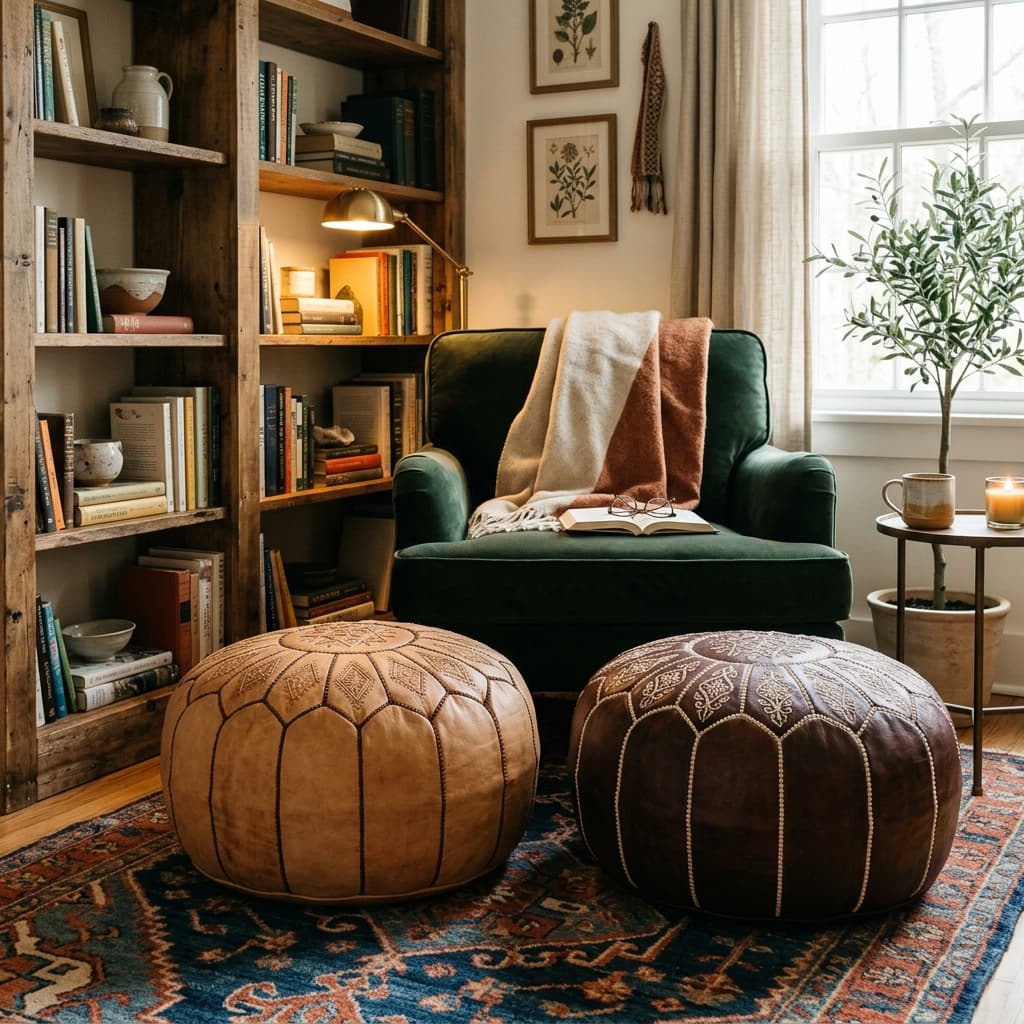
It is impossible to think of Moroccan decor without picturing the leather pouf. Placed at the foot of a sofa or in a corner of the living room, it instantly adds a warm, well-travelled touch. Behind this familiar object, however, lies genuine leatherworking craftsmanship.
A craftsman's object
The Berber pouf is assembled, stitched and embroidered by hand by Moroccan leatherworkers. Each piece takes long hours of work: cutting the leather panels, visible seams, embroidery and topstitching that draw the patterns. This handwork explains the slight variations from one pouf to another in shade, grain or embroidery: they are the mark of a handcrafted piece.
A thousand ways to use it
- As a footrest in front of a sofa or reading chair.
- As an extra seat, always ready when guests arrive.
- As a coffee table, with a large wooden or brass tray on top.
- At the foot of a bed or in a child's room, as a decorative touch.
- Paired with a Beni Ouarain rug or a kilim, to create a warm seating corner.
Filling it well
A well-filled pouf keeps a round, firm shape, and the leather wears less. It is traditionally stuffed with fabrics, old sheets or textile offcuts, packed in gradually until it reaches the desired firmness: a lovely way to give unused textiles a second life. Lighter stuffing makes it softer; the denser it is, the better it works as a seat.
Caring for the leather
Dust your pouf with a soft, dry cloth. Once or twice a year, feed the leather with a suitable colourless cream to keep it supple. Avoid prolonged exposure to direct sunlight and proximity to radiators, which dry out leather. The characteristic smell of natural leather on delivery fades within a few days to a few weeks in a well-aired room.
Leather that gets better with age
Over the years, leather develops a patina and gains depth: its shades evolve with use and light. Far from wearing out, a genuine leather pouf grows more beautiful and becomes a piece of character that you keep for a long time.